ANGLIA Co-operative, one of the largest retail co-operatives in the country, owes its existence to the inspiration of one man and his tent.
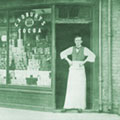
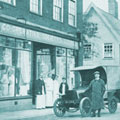
Its roots go back to 1876, when a travelling salesman from the north sold tea from a canvas covered area in Peterborough to help the widow of a local railwayman.
He gave five per cent of his takings to the widow, selling 1,400 lbs of tea that night and raising £12 for her. He also gave out coupons to his customers which they could exchange for gifts.
Rival traders argued that this put him in breach of the Lottery Act and, although magistrates sentenced the man to two hours’ detention, his actions inspired local supporters.
Using his knowledge of co-operative societies they held a meeting in the man’s tent – and the Peterborough Society was born.
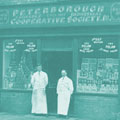
The Society prospered and, uniting with seven other local societies, saw the formation of the Greater Peterborough Society.
Anglia Regional Co-operative Society was formed in 1987 following the merger of the former Greater Peterborough and Anglia Co-operative societies.
Today Anglia Co-operative employs 1,804 people - with its food, funeral, travel and optical retailing controlled from its head office at Burch House in Saville Road, Peterborough.
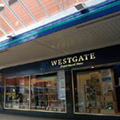
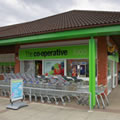
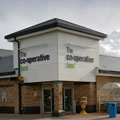
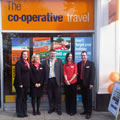
It has 27 foodstores and 24 funeral homes – plus 15 travel branches, three optical branches and a hair salon in its specialist retail portfolio, and two department stores.
Co-operatives exist to serve and reward their members – and Anglia Co-operative has 189,000 active members.
The Co-operative movement is made up of many separate and independent societies. The first successful retail co-operative society was formed in 1844 in Rochdale by a group of Lancashire weavers.
Just like Anglia Co-operative today, the Rochdale Pioneers sold food at reasonable prices from a shop in the town, introducing a dividend that meant its customers became members and received a reward based on their purchases.
Their model was used by many subsequent societies – and within 50 years of the Rochdale Pioneers’ launch there were over 1,400 co-operative societies covering the length and breadth of the country.
Over the years many of these merged to form larger, more efficient businesses – in the same way that Anglia Co-operative developed. |